Conflicts, Disasters and Displacement
in Mountain Areas
A Zoï Analysis
written by Peter Schwartzstein
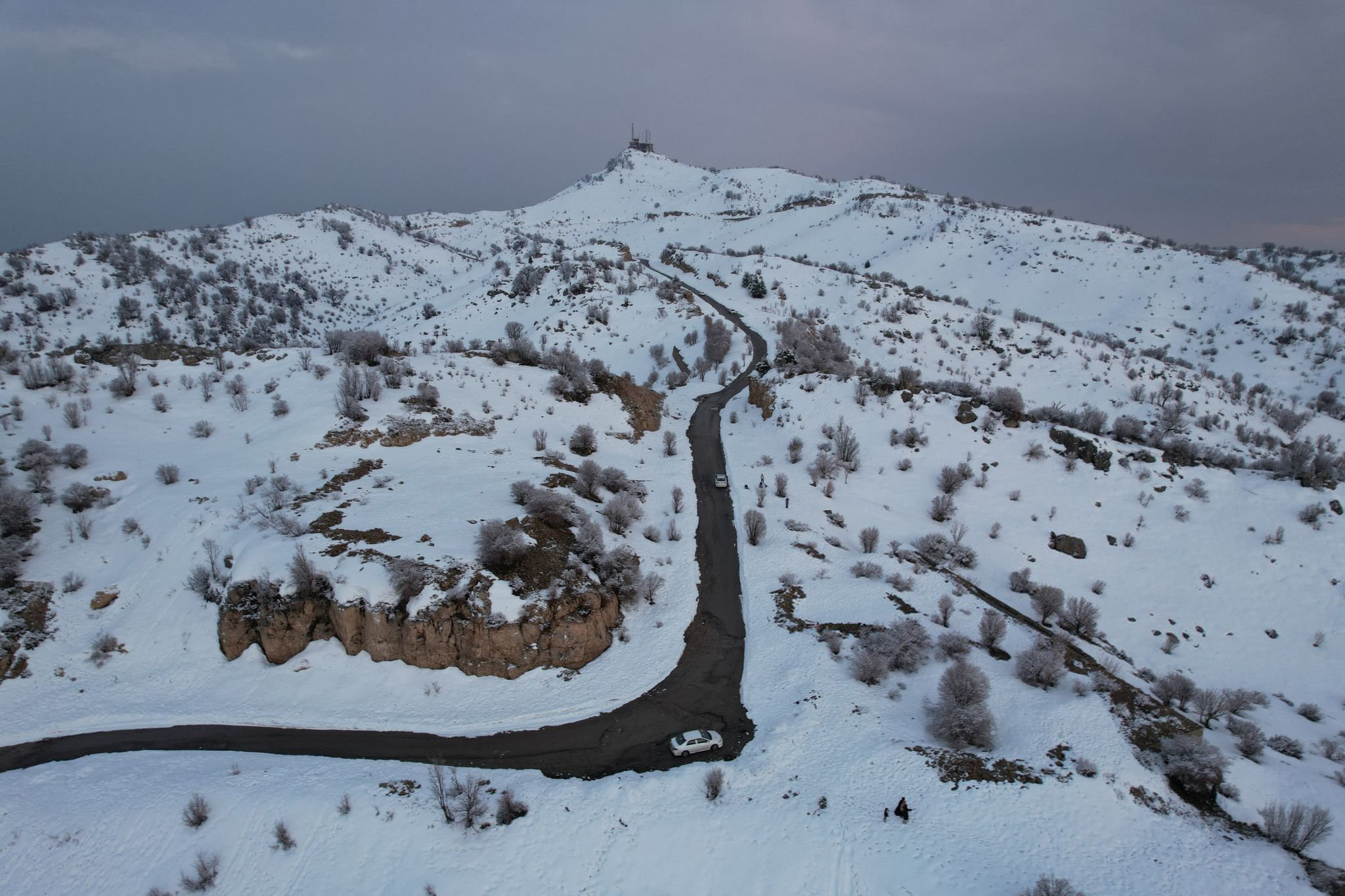
Gara mountain range, northern Iraq's Dohuk, Kurdistan region. February 21, 2024. (Photo by Ismael ADNAN / Getty Images)
A Zoï Analysis
written by Peter Schwartzstein
The villages around Gara Mountain have never been easy to live in, burdened, as they are, with poor soils, bad roads, and limited access to markets high in the uplands of Iraqi Kurdistan. They’ve been all but uninhabitable in recent years.
Bounded on all sides by newly constructed Turkish military bases designed to stifle militant group movements––and bombarded by frequent airstrikes, most residents have fled to lower ground. For the few who remain, life is such a struggle that there’s every likelihood that they’ll soon follow the others into exile.
The situation is no different around the adjacent Matin mountain, a long low massif around which 90 villages have effectively been emptied, according to local civil society organizations. Regular civilian casualties have sapped locals’ resolution. Some villages were forcibly depopulated in one fell swoop. Having been uprooted once before by Saddam Hussein in the 1980s and 1990s, many elderly mountain locals worry that they’ll never again see their homes.
Displacement is generally cast as a lowland tragedy, as something that afflicts people in arid, tropical, and coastal communities. Mountains rarely figure in this conversation. And that’s an extraordinary oversight. Because while many of the most publicized crises play out elsewhere, highland areas host an increasing share of those displaced by ‘hidden’ or lesser-known conflicts and natural disasters around the world.
Across dozens of countries on almost every continent, mountains provide sanctuary for more than half of the internally displaced people (IDPs) within those nations’ borders. This includes Afghanistan, where more than 1 million people have sought shelter on high ground, and this includes Ethiopia, where that number might be even greater. All told, mountainous areas host about 20 million IDPs, roughly a quarter of the global total and a percentage many times larger than their own portion of the world’s population.
However, as seen from the Middle East to Latin America, mountain communities are not merely recipients of other areas’ survivors. As the world warms and suffers through more conflict than at any point since WWII, many of these peoples are proving unprecedentedly vulnerable to forced displacement themselves. Given the unique challenges that these landscapes present for policymakers and the possibility that they'll figure even more prominently in future crises, it’s imperative that their needs and vulnerabilities are fully incorporated into the broader migration narrative.
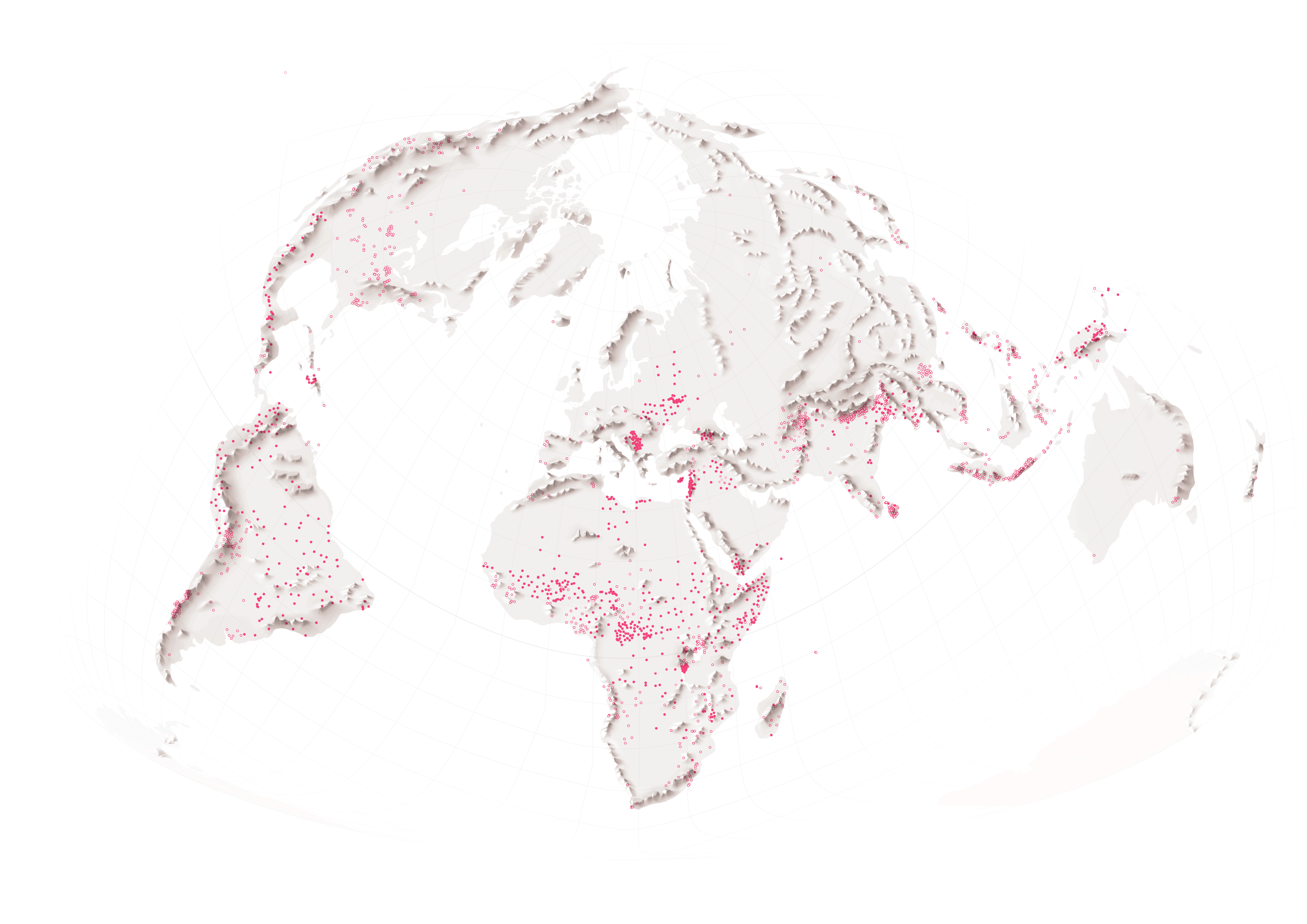

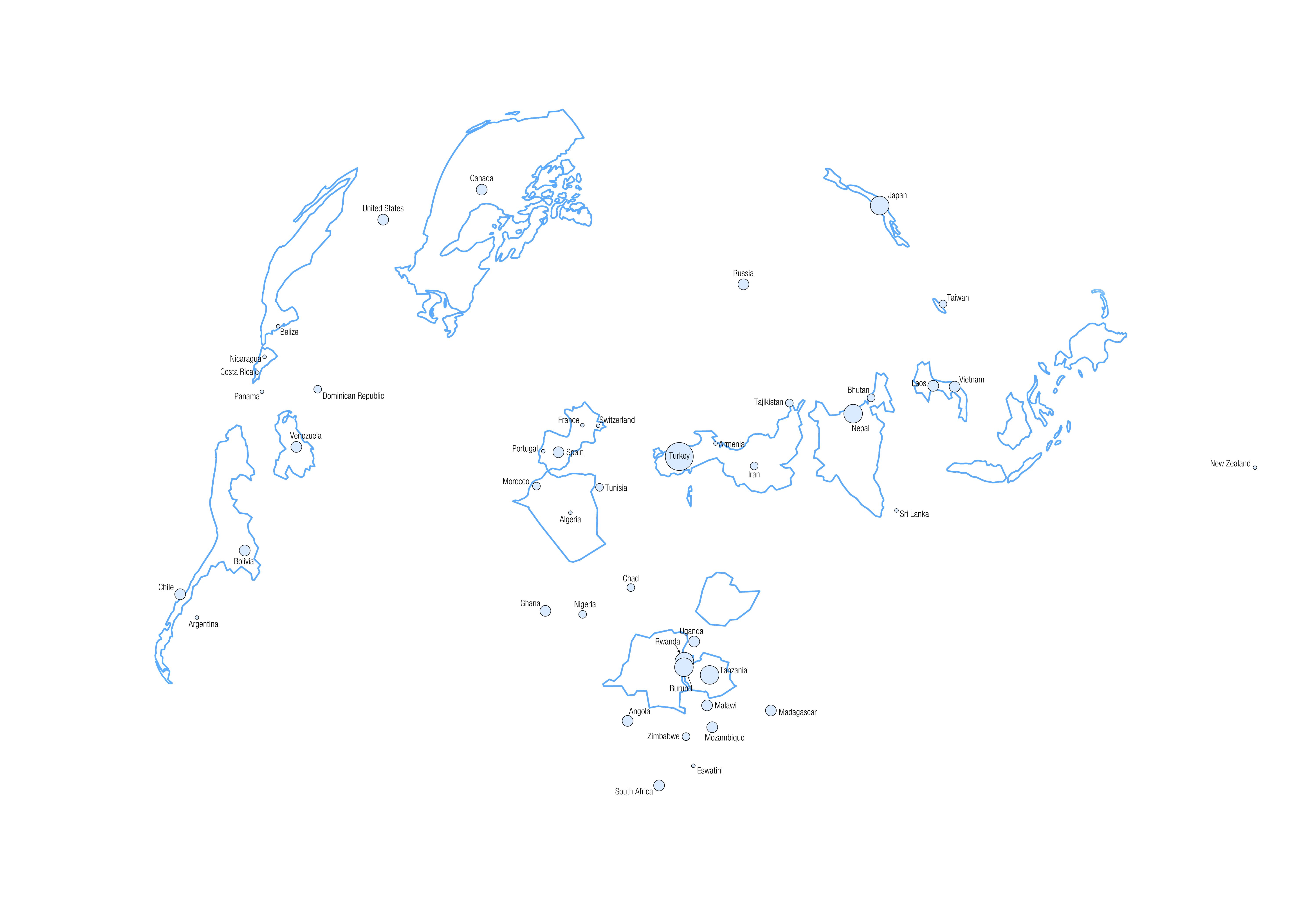
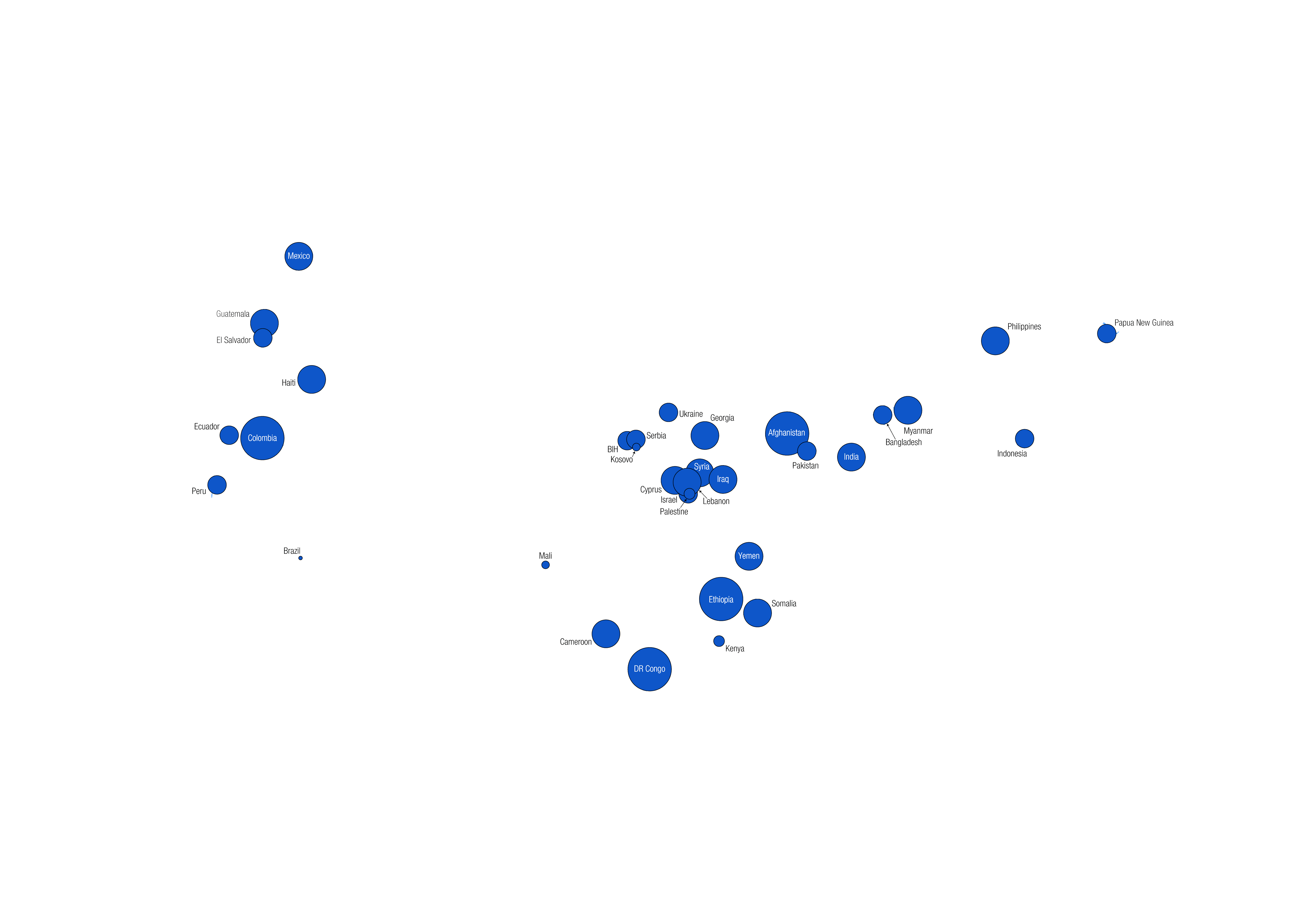
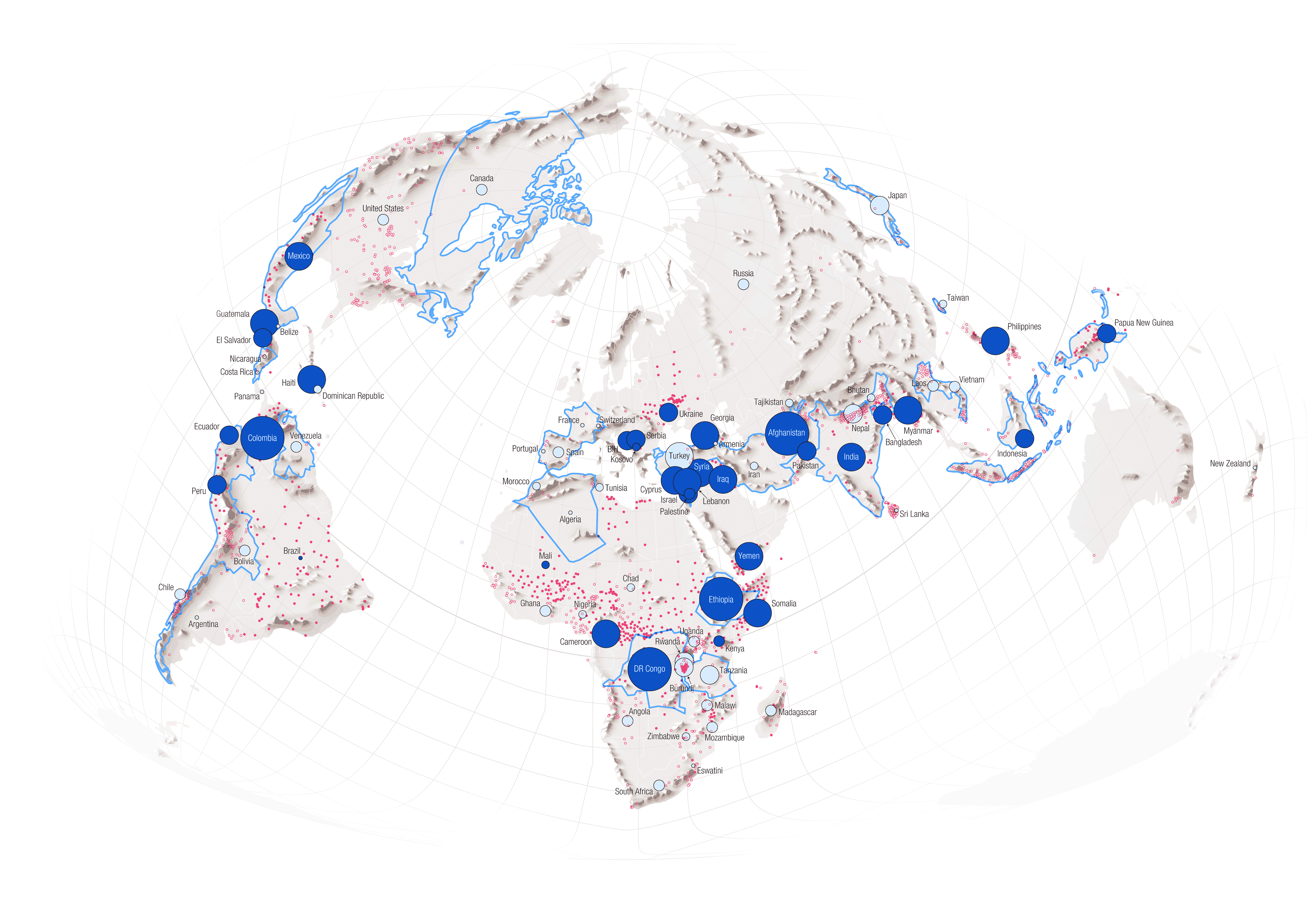
This Zoï map is based on the latest displacement data by IDMC (2025) and clearly shows the large number of conflict and disaster displaced people in the world's mountains. Of the more than 80 million persons displaced by the end of 2024, 20.6 million (about 25%) are in mountains. A large majority of the displaced in these areas are there due to conflict (18.9 million). Far fewer have been displaced by disasters (1.6 million). The map also highlights some regions, including the Middle East, that are often under the radar in discussions of mountains.
Most mountain ranges are, by their very nature, formidable-looking places, their sometimes-dazzling peaks and frequently-rocky flanks inspiring as much as they intimidate. Those features have contributed to their historic poverty. They also help explain their attraction to so many disaster-stricken or targeted peoples.
The rougher the terrain, the harder it may be for aggressors to pursue their quarry, as was the case in upland parts of Iraq and Syria from 2014 onwards. Desperate to avoid the plight of their kin, thousands of whom were massacred by surging ISIS forces, surviving Yazidis sought sanctuary on Mount Sinjar. There, they withstood jihadi assaults with their limited weaponry until help eventually arrived. There some of them still remain, too fearful even a decade later to return to their largely unrestored houses on the plains below.
And the more rugged an area, the less approachable it may seem to military actors in the first place. Put simply, mountains may not be deemed worth the bother by generals, many of whom are mindful of the difficulty in seizing these areas and very aware of the catastrophes that have befallen those who have previously tried. This is honey to the ears of fleeing lowlanders. Mountains account for roughly 15 percent of the global population and boast a commensurately small number of settlements and ‘strategic’ sites.
Amid intensifying climate change, greater elevation can even mean lesser exposure to (some) shocks and stresses as well, and hence present greater allure for inundated IDPs from coastal or river flooding. Mountainous expanses of India and Canada are among the parts of their countries that now host lowlanders fleeing wildfires, heatwaves, drought, and more.
However, just because mountains may be physically safer doesn’t mean they’ve necessarily proven particularly welcoming to those who’ve sought refuge among them. The very conditions that may render these areas less vulnerable to violence can also imperil the lives of new arrivals. For example, many Yazidis who escaped ISIS then died of exposure on Mount Sinjar. Families who fled in only the clothes they were wearing proved ill-equipped to withstand the mountain’s fiercer conditions, meager infrastructure, and insufficient supplies. So, too, on Sudan’s 3000-meter-high Jebel Marra. Darfuris have sought to escape violence along its flanks, only to succumb to the elements in a number of instances. Up to a thousand villagers may have died in a landslide there in September 2025.
Blessed and burdened with that challenging topography, mountains are few militaries’ idea of an ideal battlefield. Increasingly, many feel they have no choice. The very fact that most highlands are lightly populated and easily defensible has rendered them enticing to insurgent and rebel groups. As a result, the states intent on quashing them are being drawn ‘uphill,’ to predictably sorry effect for resident populations.
Some of this proliferation of mountain violence may simply be a numbers game. With more conflict, fewer parts of the world are escaping at least some kind of hostilities. Highlands are receiving their ‘fair’ share.
Some of it might be a precise consequence of mountains’ intimidating nature. The difficulty of waging war at altitude can incentivize armies to collectively punish residents in order to deprive their adversaries of food and shelter. This deliberate conflation of civilians and combatants is sometimes easier for states in distant mountain areas with limited media penetration and that are home to peoples who may be perceived as ‘backwards.’ From the mountains of northern Yemen to the jungle uplands of Colombia, these tactics might be getting more common as international humanitarian norms breakdown.
But there may also be a grimly novel reason why more violence and displacement is being visited on mountain peoples. As drones and other forms of technology advance, these landscapes are becoming less forbidding-looking for military action. Consequently, we’re now seeing conflicts, such as the Nagorno-Karabakh war of 2020, that may not otherwise have been deemed militarily viable. The statistics tell the story of that development, the volume of displaced peoples from mountain areas surging since.
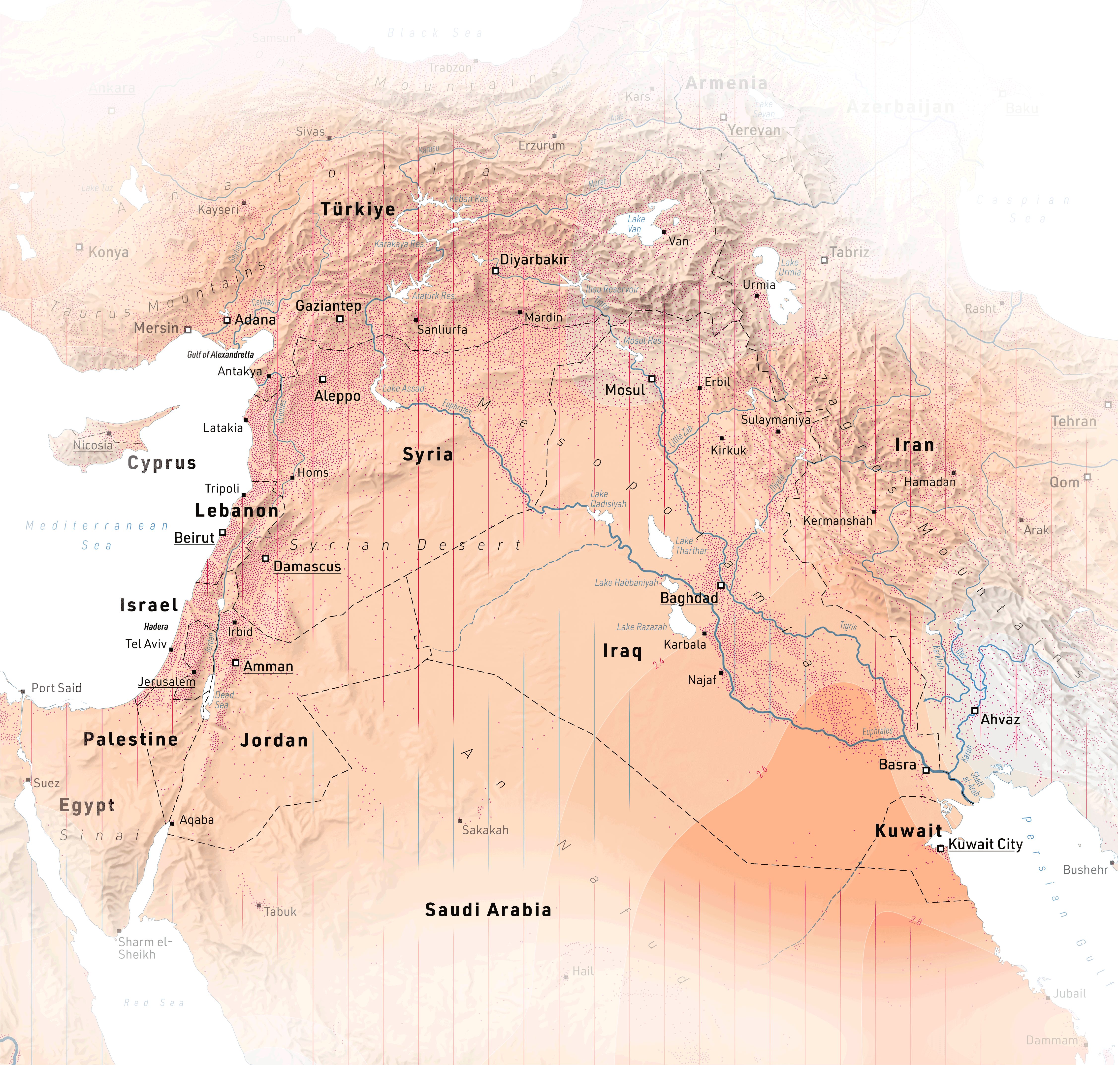

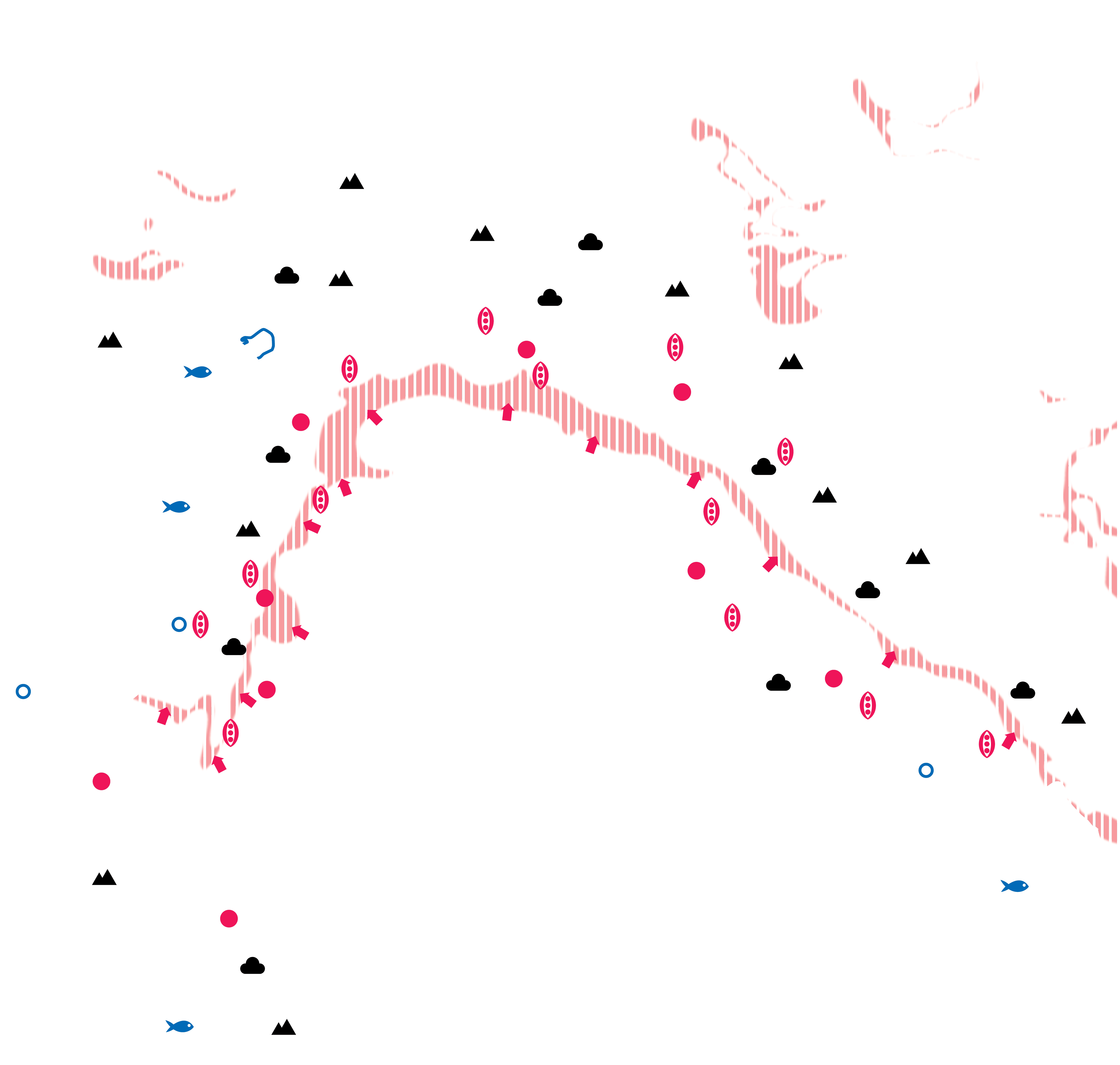
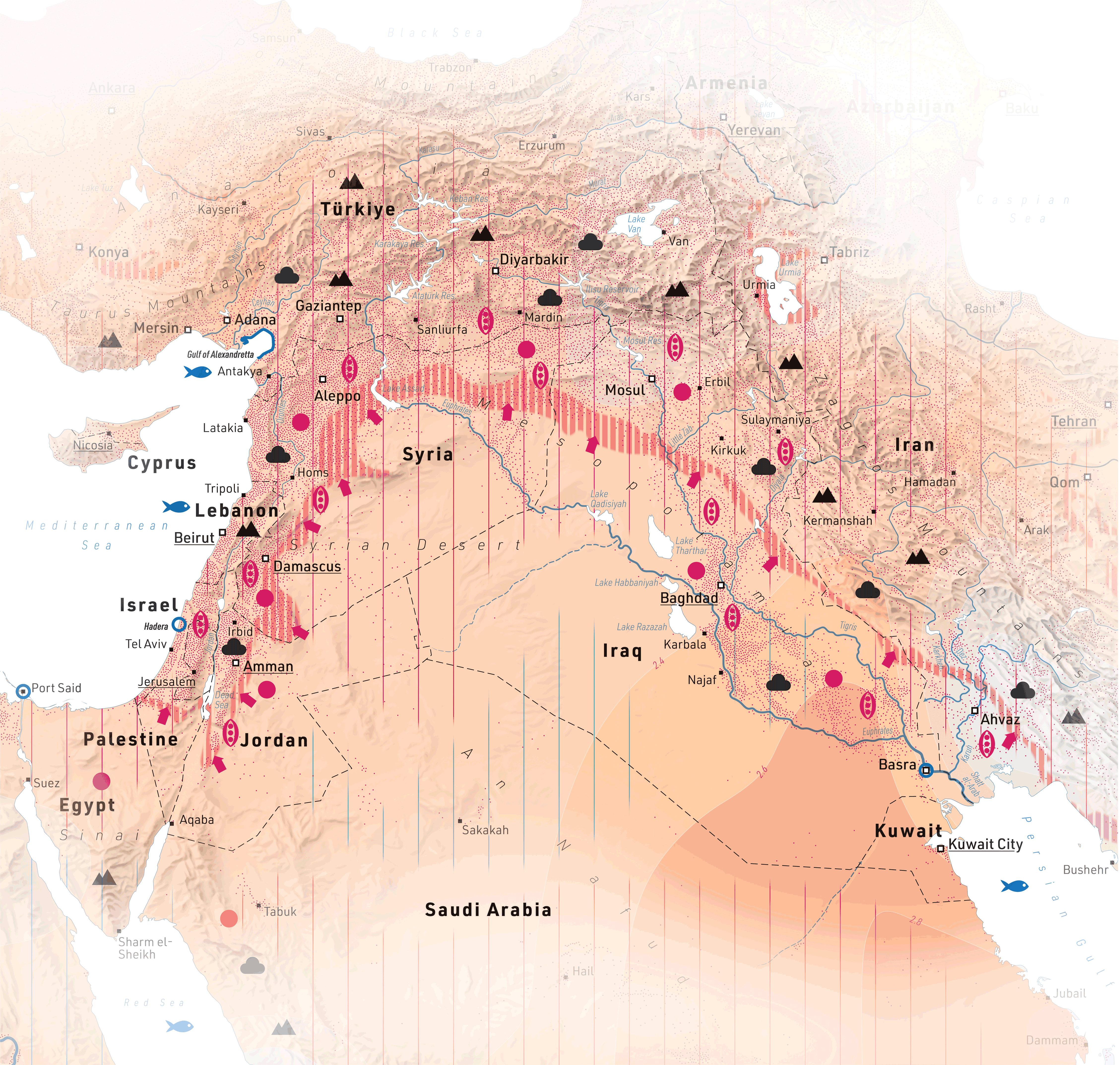
The Middle East is already grappling with temperature increases of over 1.5 C, with cascading impacts on food, water, and energy security across the region. These challenges, compounded by extreme weather events and natural disasters, can displace populations and increase competition for resources, the results of which can create or exacerbate conflict and fragility.
Still, if mountain peoples were hoping for some relief from unhappy recent experience, they’ll likely be disappointed. Current trends promise only an intensification of the forces that are turning highlands into greater recipients and sources of migrants.
In an era of deepening water stress, mountainous areas may become even more strategically useful to thirsty powers seeking to claim their resources. So too the hunt for critical minerals. Hungry for newly valuable materials, states are scouring upland areas in ways that have frequently ended poorly for those in the vicinity.
Moreover, while mountains will likely continue to lodge lowlanders displaced for climate-related reasons, including in richer parts of the world, worsening stresses among their peaks and valleys will almost certainly fuel an even bigger exodus of their own peoples to lower elevations.
For example, in Nepal, worsening flash floods, landslides, and glacial lake outbursts, among other extreme weather events, are pushing many villagers from hilltop villages into the valleys, where many then suffer from climate shocks of a different nature and soon migrate onwards to cities.
To visit many mountain communities is to see places living on borrowed time.
Peter Schwartzstein is an environmental journalist and researcher focused on the connections between the environment and politics and security, with a particular expertise on the climate-violence nexus. The OP provides a highly relevant perspective of issues of climate change and security often overseen in the global mountain agenda discussions.